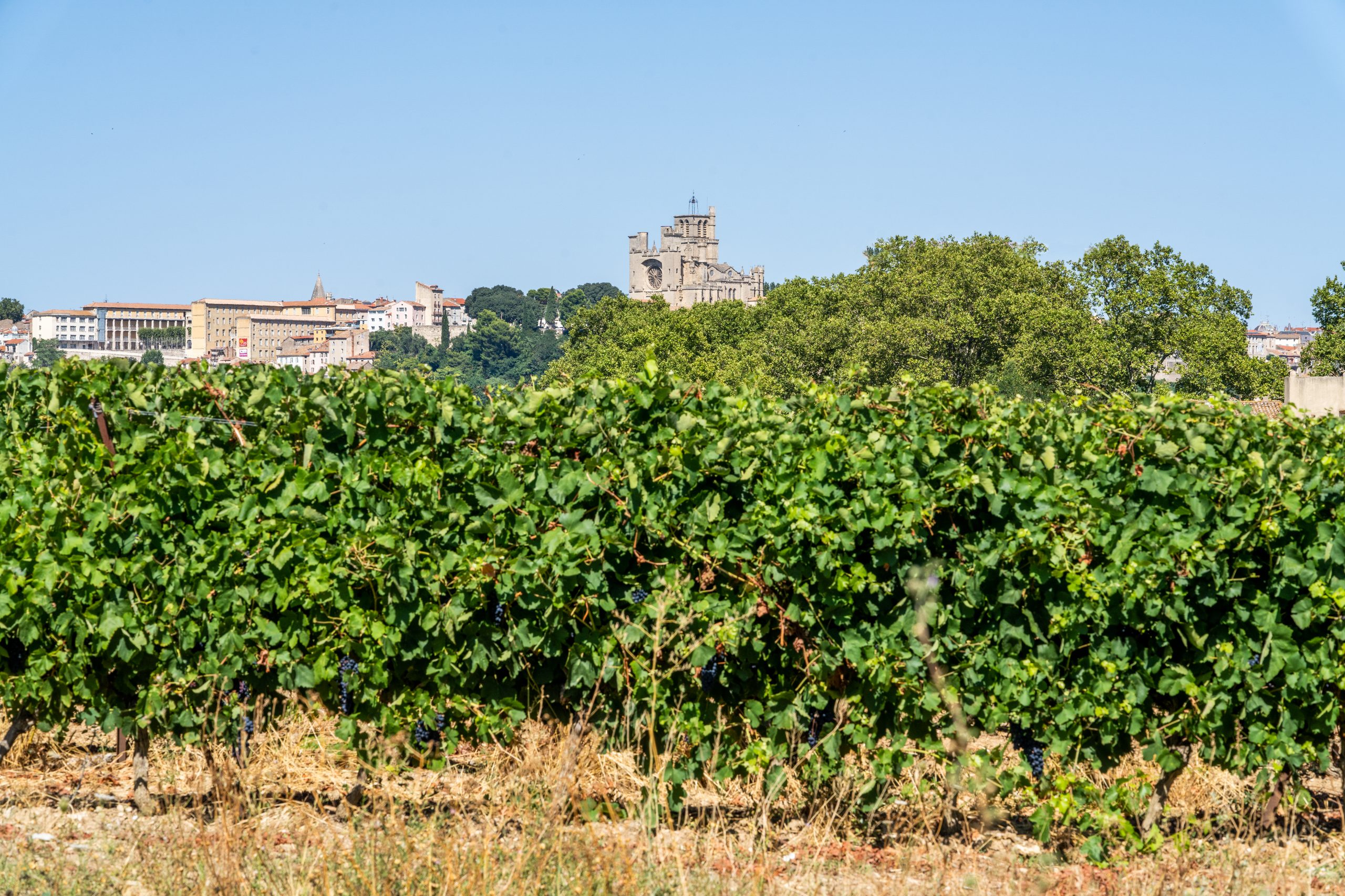


Coteaux de Béziers
100 % Mediterranean!
Béziers, the historic capital of the Languedoc wine region
The Béziers region, home to some of the oldest vineyards in Languedoc, is a historic cradle of Mediterranean winemaking. Renowned for its rich viticultural heritage, this area continues to produce wines that embody the authentic flavors and character of the Mediterranean.
PGI Coteaux de Béziers and its geography
If you had to choose one landmark for the wine region, it would most certainly be Béziers cathedral which can be seen from miles around. Admittedly, the town of Béziers is no longer the powerhouse of the wine trade that it was in the 18th and 19th centuries, but it remains surrounded by vineyards and the focal point of an PGI whose boundaries and vineyard blocks follow the contours of the rolling hills ringing the typical wine villages of Languedoc.
Colors
Rouge
21 %
Rosé
51 %
Blanc
28 %
Main grape varieties
Autorized for the Reds
- Cabernet Sauvignon
- Grenache
- Cinsault
- Carignan
- Merlot
Main grape varieties
Authorized for the Rosé
- Cabernet Sauvignon
- Grenache
- Cinsault
- Carignan
- Merlot
Main grape varieties
Authorized for the Whites
- Chardonnay
- Sauvignon Blanc
- Viognier
- Vermentino
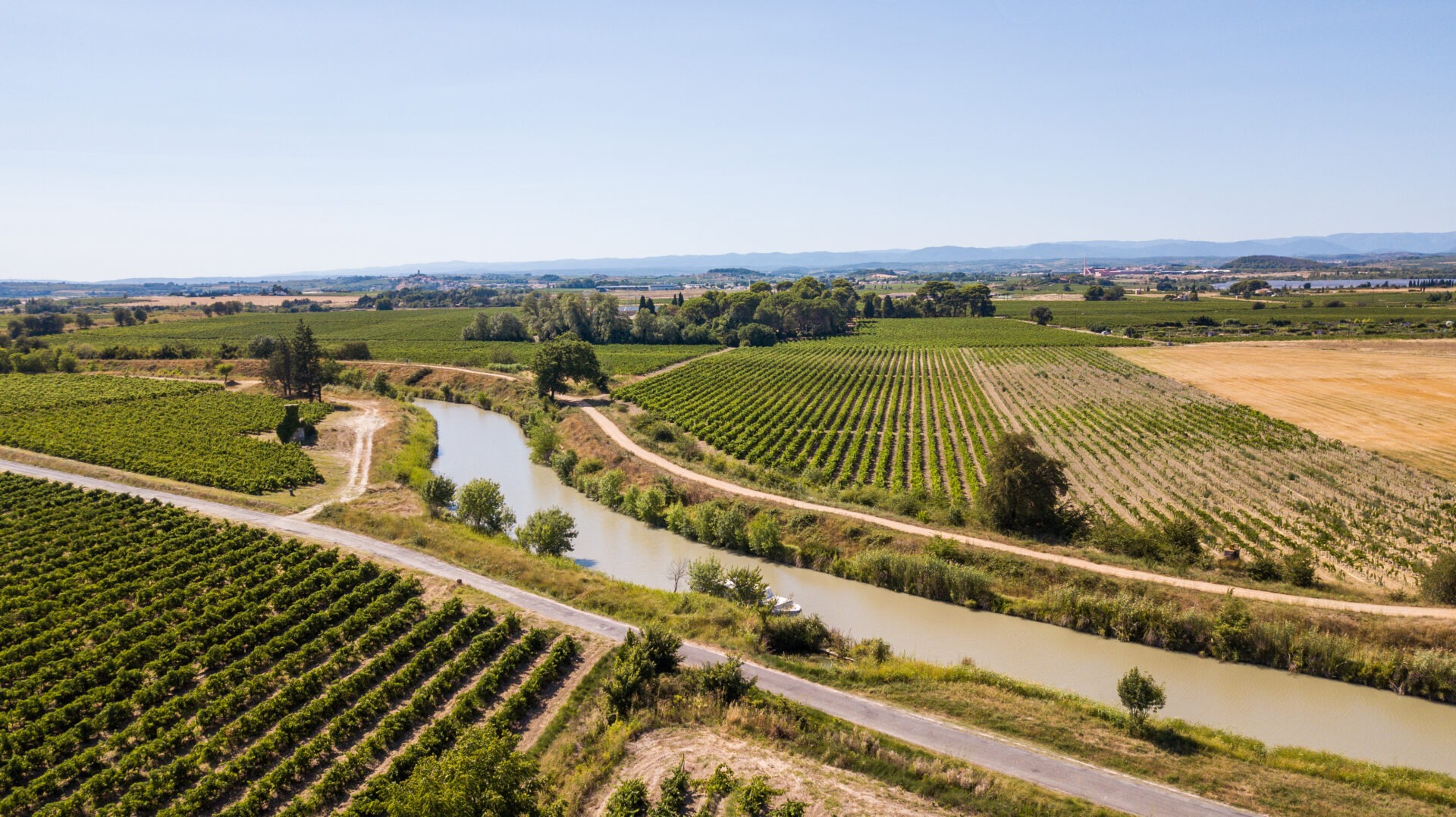
terroir
Often, when referring to terroir, emphasis is entirely placed on the geology. Certainly the nature of the soils and sub-soils is essential, of course. But omitting to take into account the climate is tantamount to only addressing half of the issue of terroir.
With its hot, dry summers, mild winters and springs and autumns that are not lacking in periods of heavy rainfall, the Mediterranean climate that shapes the region’s weather patterns is ideally suited to growing vines. The region displays great aromatic diversity, with notes of red or even black fruits in the reds, red fruits in the rosés and citrus and white-fleshed fruits in the whites entwined with floral notes and garrigue perfumes.

History
As early as the 6th century BC, and even before the Phocaeans introduced them to Marseille, vines were grown in the region. The vineyards of Béziers and its surrounding area enjoyed their heyday under the Roman Empire and subsequently from the 17th to the 19th century, boosted by sea and rail transportation which promoted trade in wine and allowed some of the locals to amass considerable fortunes. They also experienced their hours of darkness, like at the turn of the 20th century, when a severe wine industry crisis led to mass demonstrations in 1907.