

Vicomté d’Aumelas
the golden valley
Oh, what a great find !
Calling all history buffs, wine enthusiasts and lovers of beautiful scenery – it’s about time you shot off to explore an PGI that is still under the public’s radar.
PGI Vicomté d’Aumelas and its geography
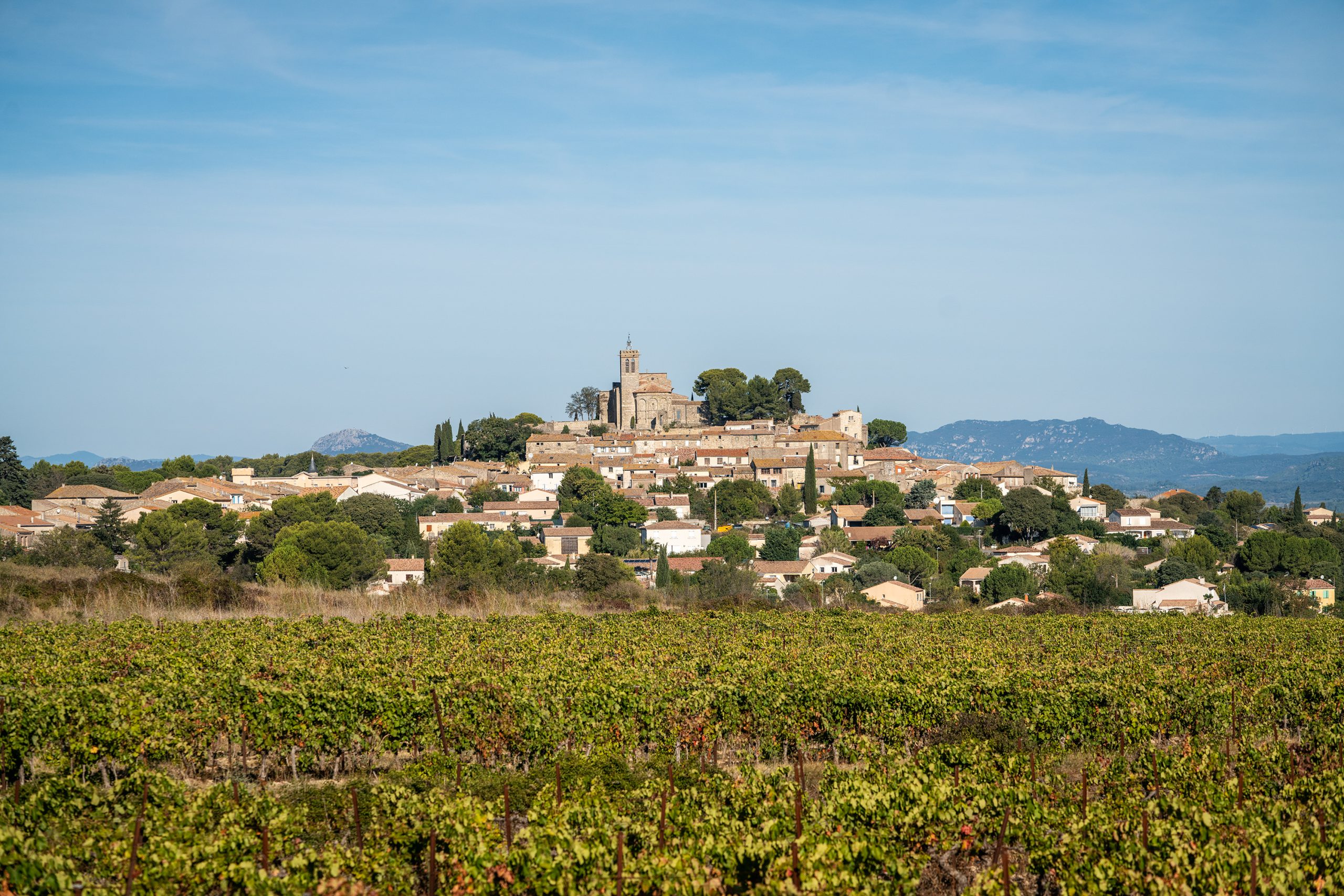
The vineyards stretch from the ‘Way of the Cross’ in Gignac in the North to the village of Saint-Pons-de-Mauchiens, near Pézenas, in the South. Two landmarks provide the backbone for the local geography: Aumelas plateau, which creates a backdrop for a series of vine-clad hills, and the river Hérault, which plays a vital role in regulating the heat in this neck of the woods, which can be extremely hot.
Colors
Rouge
64 %
Rosé
25 %
Blanc
14 %
Main grape varieties
Autorized for the Reds
- Cabernet Sauvignon
- Carignan
- Grenache
- Mourvedre
- Syrah
Main grape varieties
Authorized for the Rosé
- Mourvedre
- Cinsault
- Merlot
- Grenache
- Syrah
Main grape varieties
Authorized for the Whites
- Chardonnay
- Grenache blanc
- Ugni Blanc
- Viognier
terroir
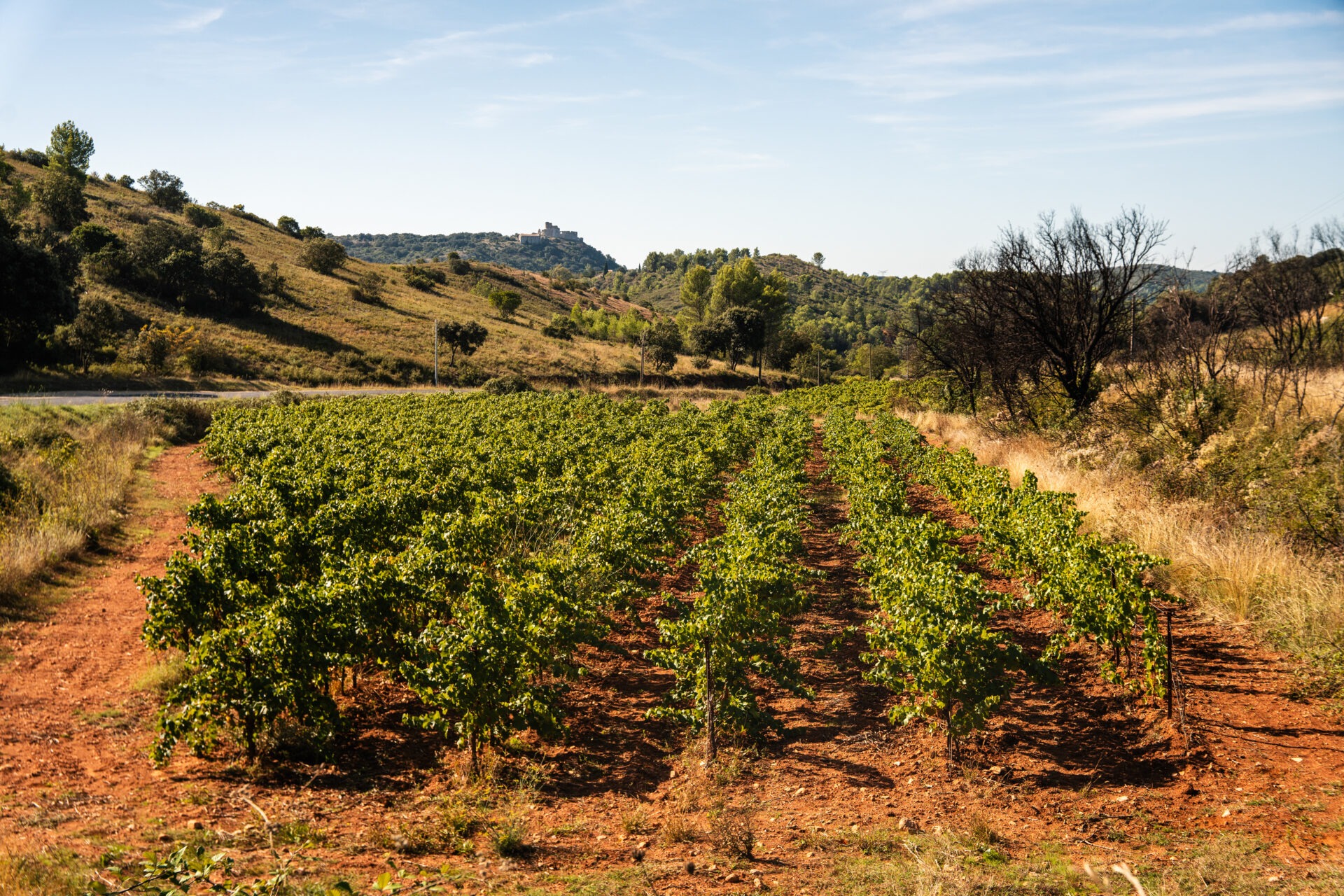
Set between Montpellier and Béziers, North of Sète, PGI Vicomté d’Aumelas offers some impressive subject matter for budding geologists. From sandy-silt molasse, limestone sand and marl to sandstone and alluvium, summarising this mosaic of soil types is a pretty tall order! The same goes for elevations, and therefore for climates, with vines climbing up in tiers from 20 to 340 metres above sea level.
The red wines are well-structured, balanced, rounded and appetising – they show at their absolute best after a few years’ bottle age. The same pleasure can be had from exploring the engaging, fruity rosés and the whites, which can be fairly taut – making them the perfect companions for oysters from Thau Lagoon! – or more full-bodied with the ability to partner with fish dishes.

History
In the area surrounding Clermont-L’Hérault – the largest town at the core of the designation – you might stumble across a windmill, a chapel, a standing stone or even a castle built by the Guilhems, the lords of Montpellier, around a bend on the windy roads or paths. The ‘Vallée Dorée’ or golden valley, named as a nod to the locally produced white table grapes, is home to a rich and interesting heritage.