
Pays d'Hérault
The heart of Languedoc
Super Hérault
PGI Pays d’Hérault stems from several thousand years of winegrowing traditions. Today, it is enjoying well-earned success – mirroring that of the entire Languedoc wine region – with wines that aim high in terms of quality, but remain very accessible.
PGI Pays d’Hérault and its geography
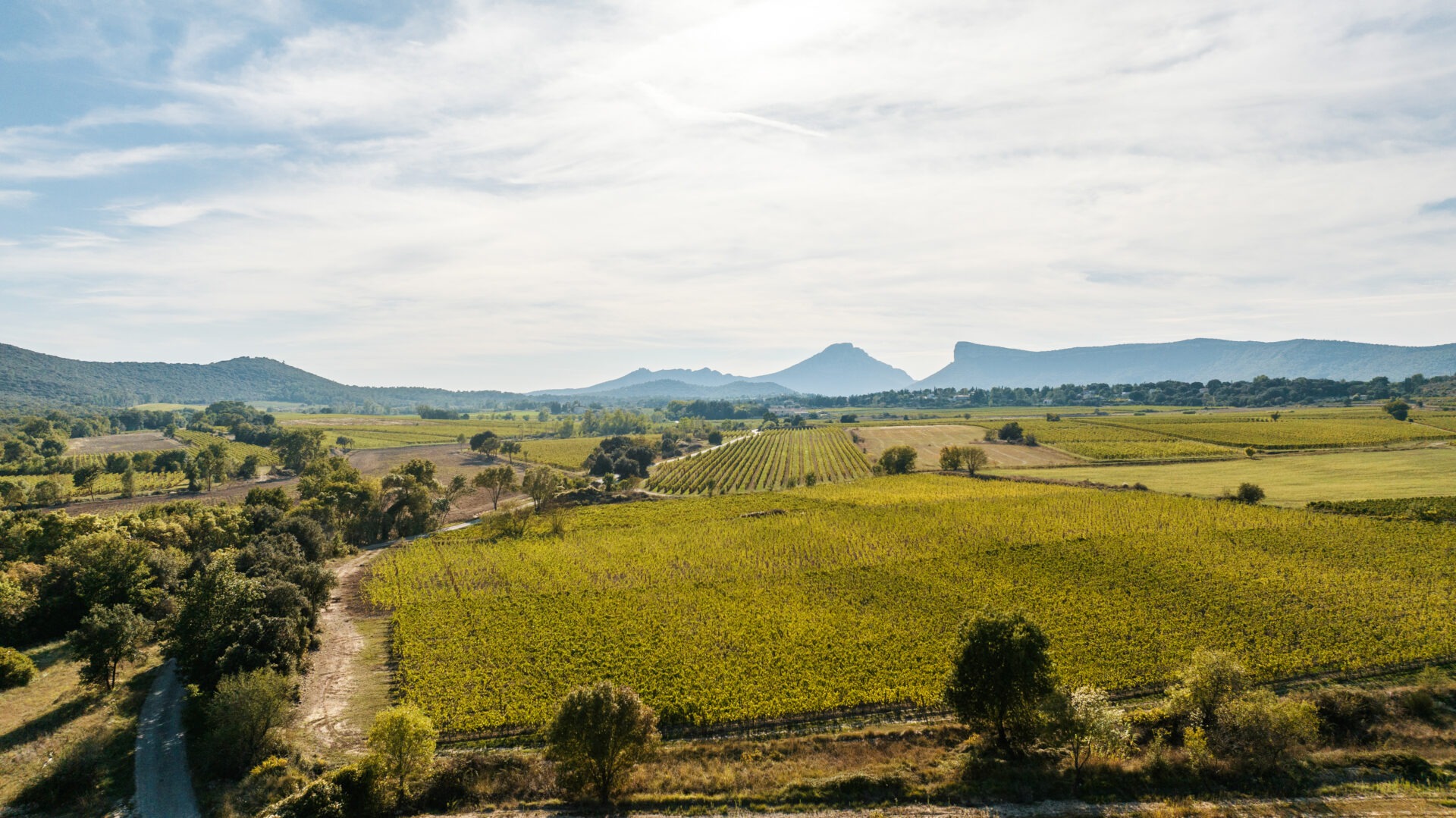
Admittedly, the Languedoc wine region covers other departments, but Hérault is its true centre. From its high-elevation lands in the Cevennes and around the Montagne Noire and its most remote, unspoilt and spectacular areas to its unique coastline dotted with lagoons, the 34-numbered department forms an extensive amphitheatre facing the Mediterranean Sea.
Colors
Rouge
52 %
Rosé
42 %
Blanc
6 %
Main grape varieties
Autorized for the Reds
- Carignan
- Cinsault
- Mourvèdre
- Syrah
- Grenache
Main grape varieties
Authorized for the Rosé
- Carignan
- Cinsault
- Syrah
- Grenache
- Caladoc
Main grape varieties
Authorized for the Whites
- Sauvignon blanc
- Chardonnay
- Vermentino
- Colombard
- Grenache blanc
terroir
Inevitably, with such a large footprint, variety is one of the key words for understanding PGI Pays d’Hérault. The complex geological history, range of elevations and varying distances from the sea are the essential factors that contribute to this diversity, as much in terms of soils and sub-soils as the climate.
There are relatively significant differences in rainfall, diurnal shift and influence of the wind, which includes the Tramontane and the Mistral. There is no standard style of wine but rather shared characters: site-expressiveness is very authentic and winegrowers now aim for balance, with little inclination to bottle wines that are too alcoholic.

History
The emergence of this region, which is particularly conducive for growing vines, predates the arrival of the Romans. Before them, the Phocaeans and the Phoenicians had already established vines in the area. In the 19th century, vineyards enjoyed an unprecedented boom due to the railway which facilitated transportation of the wines. Over the past twenty or thirty years, Languedoc wines have experienced a quantum leap in quality.